Welcome!

We're happy to see you here at the Benevolent Blog. Please also visit us at www.benevolent.net!

Monday, May 28, 2012

Who is Graduating?


It’s graduation season and while the news is full of depressing stories of young adults with few job prospects, planning to move back in with parents after graduation, the statistics show an improvement. 


According to the Associated Press, the unemployment rate for college grads under 25 is lower in 2012 (so far) than in either 2010 or 2011 (ABC News). Perhaps the clouds are clearing for graduates – at least for those who complete their degree by age 25.


Of the over  19 million college students in the U.S., though, about 40% are attending part time. Of the almost 7 million attending community college, it is anticipated that fewer than half will complete an associate’s degree or transfer to a four-year university within six years of enrollment. (US News & World Report; Institute for Education Sciences)


This brings us to the question – who is graduating? Estimates show that in the U.S. this year, over 3 million will graduate high school or earn a GED, over 700,000 will complete an associate’s degree, and over 1.7 million will complete a bachelor’s degree. That’s a lot to celebrate, especially when you know the odds that many of them have had to overcome just to get to school every day.
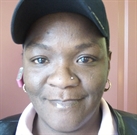

On the Benevolent site (www.benevolent.net), we feature many people who are pursuing degrees – associate’s, bachelors, certifications – and each one faces incredible challenges along the way towards those goals. Almost none of them reflect the stereotype of the 21-year-old fresh-faced graduate, ready to take on the world. They look like Jean, a 42 year old nursing student who recently interned for the Transit Authority cleaning trains.


They also look like Samantha who is married, works full time as a home visiting aide and goes to community college in the evenings. Despite her young appearance, Samantha is a 26-year-old mother of a three-year-old.


Benevolent’s students are mothers and fathers. They’re studying to be nurses and radiology technicians. They’re studying criminal justice and business. They’re going to school part time while working full- or part-time. They’ve survived cancer, domestic violence, homelessness, and more. They’re not the students the headlines and stories focus on when they’re pondering the fate of this year’s class of graduates.


For us here at Benevolent, these are the learners and strivers with whom we’re most concerned. When a low-income parent succeeds in improving his or her education, getting a better job, and finding increased stability, then the children in that household will have vastly improved chances of achieving in their own rights and landing in a more stable circumstance. When we help adult learners succeed, we help more than one generation of students  -- and those triumphant graduations, for us, will have twice the weight.


- megan kashner, founder & ceo
  Benevolent

Monday, May 14, 2012

Fierce Love...Unplanned?


A few weeks before she passed away, my Great Aunt Mil contributed to one of our Benevolent recipients. She chose to help someone who has seven children living at home with her. Aunt Mil was glad to give and glad to help, but as she did so, she said (in her 95-year-old pithy way): “Seven kids. I don’t see how she’ll ever get ahead.”

When we hear or read about the allegorical welfare mom (or welfare queen, depending on your source), she often has a great number of children – a brood, if you will. She is, of course, hyperbole, as are her numerous children. This Mother’s Day weekend, however, I found myself thinking about this allegorical figure in a different light.

On Mother’s Day I got to sleep in, celebrate with my kids and all that. Later that day I sat down to write for today’s blog and my mind kept going back to a piece of research I read recently and some trends we’re seeing among the recipients on the Benevolent site.

We launched the Benevolent site only this past December, but as early as March, I started to see a thread of connection I hadn’t anticipated. It seemed to me that of the women who posted their needs to the Benevolent site, those who described having fled and survived domestic violence had more children than those who did not report a history of domestic violence.  

Of course as we seek to help the mother who has escaped and overcome domestic violence to thrive, we do not and should not ask whether the number of children she has a connection to victimization. This started me wondering, though - was this a real trend, and if so, why?  I started looking for research to help me understand what I thought I might be seeing.

I found some articles and papers that described the ways in which abusers undermine a woman’s control over her fertility choices. These included interference with contraception (making holes in condoms, discarding a woman’s contraceptive pills or devices), sexual assault, and more. (Black, 2011) But this article posed no quantitative analysis to indicate how prevalent this was.

Another article summed up the scholarly research on the connections between unintended pregnancy and domestic violence. This one told me more. I discovered that in one U.S. study, “almost 70% of women reporting physical violence had unwanted and/or mistimed pregnancies,” and women with unwanted pregnancies were 4.1 times more likely to have been physically abused “than women with intended pregnancies before adjusting for other variables.” (Gazmararian et al., 1995)

Again, not clear causality, but certainly an arresting correlation. The author of this article explained: “The association between intimate partner violence and unintended pregnancy implies an intergenerational cycle in which unintended childbearing in abusive households can lead to repeated cycles of violence and unintended pregnancy.” (Pallitto et al, 2005)

What is clear is that the more children a mother has, the harder it will be for her to protect them, provide for them, and promote their education, simply by virtue of numbers.

Aunt Mil had a point. If there is any causality – whether widespread or even sporadic – between intimate violence and unintended pregnancy, then I want to take this moment – this Mother’s Day moment – to express my immense respect for those women who fiercely love, protect, support, and nurture children whose existence they had not planned or intended.

As a mother who held complete control over when and how I would choose to try to conceive, I concede all maternal kudos today and award them all to those mothers who protected their children, brought them to safety, fought to rebuild and thrive, and fight on today as they raise children they pray will never repeat the violence of their mutual past.

-  megan kashner, founder & ceo
   Benevolent - www.benevolent.net 
Monday, April 30, 2012

Opposite Day


Yesterday. I was having a conversation with a 7th grader from the East Coast about Benevolent and something she said really struck me. She said that what she thought was cool about Benevolent was that the people who needed support got to say what they needed and actively seek it out. From her perspective, this is like flipping giving on its head – rather than givers giving to nonprofits who then figure out what their clients and communities need, Benevolent offers a platform for those with needs to seek out support, with the nonprofits as their background supporters. 


It was an interesting lens on our work and made me think about a couple of things that came to light last week – both instances in which the funds that had been raised for someone’s need wound up being spent slightly differently than had been thought originally.

Jenny requested help with car repairs, 
but wound up needing a new used car.
Al thought he'd need a tuxedo to work 
as a banquet waiter. As it turned out, 
the required uniform was different.

In the first instance, Jenny had requested support to repair her car so that she could get herself and her sister to and from work, her kids to and from school, and her sister to and from chemo and dialysis. As it turned out, the car she had been driving broke down completely, so she plans to use the funds raised through Benevolent to help buy a new used car.


In the second instance, Al, who had sought support to purchase a tux-like uniform for work as a banquet waiter, wound up getting the job and found out that the uniform he would need was not a tuxedo – it was somewhat different. So when Al and Eva – his caseworker – went shopping for the uniform Al needed, they had the latitude to get what was required.


What this speaks to is the level of control that we’re trying to provide for those who have needs met through the Benevolent site. To us, it’s all about agency:
  • Personal Agency: The awareness that one is initiating, executing, and controlling one's own volitional actions in the world.


In so many instances, those living in low-income circumstances have little or no agency in the determination of how they receive support. On the Benevolent site, we try to be all about agency and dignity – respecting the self-determination intrinsic to any person’s success.


So perhaps my 7th grade friend was right. Maybe we are turning giving on its head. I strongly believe in the power of philanthropy and active benevolence in all its forms – giving, voting, speaking up for ourselves and others, advocating, and acting to change circumstances.  Benevolent fits in as a sort of “opposite-day” form of delivering support – a form in which those who need something hold the reins.


- megan kashner, founder & ceo

Sunday, April 15, 2012

Reduce Poverty and Improve Health

I was doing some online research this weekend, looking for cite-able sources about the connection between improvements in people’s socioeconomic status and their health outcomes when I stumbled across a piece of scholarship I simply had to share with you.


Many of us might not know a great deal about Thomas Frieden, the head of the U.S. Centers for Disease Control. Dr. Frieden is responsible for providing the expertise and tools that people and communities need to protect their health.


Turns out, the guy is incredible – has turned the CDC around, shedding bureaucracy and replacing it with action and efficiency. He also happens to be the author of the brilliant piece I found in my searches yesterday: “A Framework for Public Health Action: The Health Impact Pyramid.”


So what was so brilliant about this article? Frieden clearly lays out the reality that “addressing socioeconomic factors has the greatest potential to improve health.”


Did you get that? The thing that we can do as a society to best improve health and health outcomes as a nation will be to reduce poverty which Frieden tells us will:

• Improve immunity

• Reduce crowding and exposure to communicable microbes

• Improve nutrition, sanitation and housing options

• Increase educational levels, and nutritional options

• Reduce cardiovascular disease, some cancers, and diabetes

• Reduce drug use and violence

• and Lower vulnerability to extreme weather conditions.


Well, ok then. We’re done. We’ve solved it. All we need to do is to reduce poverty and improve baseline socioeconomic status. Let’s all get on that.


Actually, we’re already on it. You’re already on it. Each need we meet on the Benevolent site is bringing that person – and his or her family – one step closer to economic stability and sustainability. Each time you read and share one individual’s story of striving, you’re meeting and introducing others to the real people behind the numbers and maybe, just maybe, we’ll build momentum to change the conversation about policies and supports.


So, next time you hear a conversation about health care in our country, or about entitlement programs or funding for safety net supports, remember that those are actually the same conversation. We cannot continue to put low-income families in impossible situations and expect them to succeed with less and less of a foundation from which to build.


We cannot hope to see improved health, decreased obesity, drops in diabetes and heart disease rates, or drop-offs in community violence until we address the underlying reality. It’s about poverty. It’s about resources. It’s about how our civic constructs promote or inhibit people’s progress towards their goals and out of hardship and risk.


Thanks to each of you for being part of the solution. Remember to share the stories of striving and challenge you see on the Benevolent site out to your friends and family over Facebook, through email, etc. The more we introduce people to the real people impacted by low-income and hurdles to taking their steps towards stability, the more we change people’s understanding of the issues, needs, and constructs surrounding poverty in our country.


- megan kashner, founder & ceo

Monday, April 2, 2012

When the Bough Breaks

For many years, our nation’s public libraries have been providing more than books. After-school homework help, computer access for students and job searchers, preschool and adult literacy programming, shelter for those in need, and more have been provided in libraries and by their professional staff for decades.


In the current state of municipal budget shortfalls, many cities and towns have decided to cut library branches and decrease library hours to cut costs. Like the removal of any public service, the loss of library access has an impact on many people. It is a tear in the social safety net.


We know that school kids, job seekers, shelter-seekers, and learners of all ages were impacted when the City of Chicago implemented $3M in budget cuts in January of this year, cutting 172 low-wage library jobs and closing 75 branch libraries on Mondays. The community lost access to critical services and 172 people lost their jobs as clerks and pages in the Chicago library system.


Rufus was one of those who lost a job in the Chicago Public Libraries this winter. Now he’s asking for help with the funds necessary to purchase the right-sized car seat for his infant son and to buy his son books and toys, as he would have been able to do had he not lost his job.


I am not arguing here for or against curtailing library hours or jobs. Cuts had to be made in the city’s budget. If those funds had instead been pulled out of our public transit system or out of violence-prevention programs, we would see similar tears in the fabric of support and resources for those living close to the economic edge.


I wonder whether schoolteachers are now finding that their students cannot be expected to complete homework on Monday evenings because they can’t access after-school homework help or get onto a computer to complete their assignments. I wonder whether public transit stations, malls, fast food restaurants, and the like are feeling the strain of the volume of people who might otherwise have been reading, taking shelter in or attending programs at public libraries and who are now at loose ends on Mondays.


We can see in Rufus’ situation that the low-wage positions of clerk and page in a library system were not sufficient to provide these earners with any sort of a financial cushion. Less than three months into unemployment, Rufus tells us of near-homelessness and an inability to purchase basic supplies for his son.


This is where you see clearly the multi-generational effect of the fragility of our safety net. When Rufus lost his job, his son’s potential future earnings dropped along with his father’s. While we hope that Rufus and his son prove to be the exception to this rule, research and history tell us that children whose parents are low-income earners are exponentially more likely to be fixed in the same socio-economic status as their parents.


Rufus was on his way to a career path and stability in earnings. We hope he’ll get right back on track, but in today’s job market, that is going to be a challenge. In fact, we know from research cited in the Chicago Tribune last week that within Rufus’ age group, his chances of being rehired within 18 months of losing his job are approximately 77% (down from 89% before the recession) and that he’s likely to be hired at a wage 11% lower than the wage of the job he lost. This has implications for Rufus and for his son’s safety and development.


When we step up and help Rufus’s son during his dad’s jobless patch, or when we help Brenda get a computer so that she can complete her training in Radiology and her son can apply to colleges, we’re alleviating the human impact of cuts and shortfalls and addressing two generations’ needs. We’re fixing the holes when the social safety net has stretched to the breaking point. We’re doing it because we can see and hear Rufus and Brenda and we can be there to tighten the weave under them at a critical moment.


- megan kashner, founder & ceo


Monday, March 19, 2012

More than the Monetary Value

“I really appreciate your help from the bottom of my heart. It is nice to know there are kind people still out there in the world.”

“The Benevolent Community has shown me overwhelming generosity. It has renewed my faith in humanity.”

“…it warms my heart to know that there are generous people out there…I say to others don't ever give up on your dreams and goals.”

“…more than the monetary value, I so greatly appreciate the thought behind the gift. Having a need is a burden, but your action has really lightened the load.”


When I conceived of the Benevolent concept a little over a year ago, I imagined that those who chose to contribute to meet the needs of the individuals on the site would be moved by their experience. I hoped that by allowing for a one-to-one connection between those with needs and those who could help, I would succeed in opening the eyes of donors to the realities of the circumstances faced by low-income adults every day as they strove toward their goals.


What I didn’t anticipate with the same clarity is how moved those who receive help through the Benevolent site would be by the support of those who contributed to their needs. Now I see it clearly. Our recipients are telling us that getting their need supported through Benevolent has been significant not only in a practical way, but also in a much deeper, much more personal way.


“The Benevolent Community has shown me overwhelming generosity. It has renewed my faith in humanity,” Bridgette tells us. She was helped by nine supporters who read her story of striving to complete her college education after having survived cancer.


When I read this and the responses of other recipients who were happily surprised to discover that there were people in the world who would choose to care about and help them – I saw clearly how those who have been trying as hard as they could for as many years as they can remember might easily lose sight of the humanity and kindness in their community and in others.


I know now that Benevolent is delivering more value than I had anticipated.


When we give to those with needs posted to Benevolent’s site, we’re gifting hope and inspiration, and delivering it with respect and humanity. This could seem trite to some, but imagine how impersonal the process of applying for and maintaining one’s unemployment eligibility, paying one’s tuition and rent, filling out papers for children’s school and for special services and supports and job programs can be.


In traditional applications for support or services, people are asked to fill out pages and pages of forms to prove that they’re worthy and not trying to bilk the system. On the Benevolent site, we’re asking questions like “What is particularly challenging about your situation? What is the toughest thing you face?” and “Why will meeting this need now move you towards your future goals?” and “Talk about what it will mean to you if you get your need met.”


These are questions that presume, up front, that the person who comes to Benevolent with a need is human, striving, and has feelings, reactions, and insight. The very uniqueness of this kind of respect and of the willingness of strangers to help out – the way it surprises and touches recipients -- demonstrates the deeply-ingrained impact of the ways we frame and treat need in our country and in our systems of support.


As we continue to meet people’s needs, we now know that we also get to restore their faith in humanity and let them know that there are generous, kind people in their community. Most importantly, we get to let people know that we see them, hear them, and hope they will succeed. That, in itself, is a gift.


- megan kashner, founder & ceo

Tuesday, March 6, 2012

The Power of Women

Does this sound like your life or the life of a woman you know?

“I have to get my kids to school at different times. On Wednesdays my daughter does basketball in a whole other building, and my son does Boy Scouts way up North.”

This was shared by Jenny whose need is posted to the Benevolent site. In honor of Women’s History Month, this post is dedicated to the power of women to support, persevere, and thrive.


Jenny, her sister and her mother are forces to be reckoned with. They take care of one another, take each other in when necessary, and catch each other when they fall. All the while, keeping everyone around them focused on accomplishing goals and pursuing education.


All this sounds like a rosy picture. Until, that is, we hear the back-story. Jenny survived and stood up against abuse, ran from her abuser, was fired from a job one month before her due date, and found security and help from her sister when she needed it most.


Just facing the realities of everyday life and parenting is a Herculean task. When you add domestic violence and gender discrimination to the mix, it’s a challenge worthy of a superhero. This challenge, of course, is what millions of women around the world face every day. Jenny is one and in my mind’s eye, she is, indeed, a superhero -- deflecting danger and zooming around any obstacle that clutters her path.


These dangers – domestic violence, assault, discrimination, and more – still so seemingly commonplace in our country-- are at the core of this story. Jenny is so much like so many other women – women who survive and persevere, women who take care of everyone around them, rising up from whatever knocks them down. At a time when a woman’s position in politics and public discourse is at a low point, we cannot avoid this all-too-apparent truth – that women’s circumstances continue to be marked by gender-related challenges and obstacles.


As Jenny’s story continues to unfold, we find that it is now Jenny’s sister who needs help. Jenny’s sister has cancer and is on dialysis; Jenny provides transportation to her chemo appointments, dialysis, and work. On top of all that, Jenny is single-handedly raising her kids and preparing to go back to school. I find myself becoming exhausted simply by reading about Jenny’s life and challenges.


”I bring the kids to school, I go to work, I take my sister to work and to her doctor’s appointments and her dialysis appointments, and I will be starting school…”


Jenny is asking for help getting her car repaired so she can continue to drive, get everyone where they need to go and keep them all on track.


I’ve got two kids and they’re active and involved, like Jenny’s. It’s hard for me to fathom how I would ever accomplish what Jenny does each day were I not able to use my car. Helping this superhero woman, who has overcome so much, get her car fixed will mean the difference between whether she and her loved ones can continue to pursue their life goals, or whether they will face an impasse.


There are so many Jennys out there – running from dawn until late into the night, keeping themselves and their family members on track, repelling abuse and assault when it pops into their lives. During this year’s Women’s History Month, I’ll be paying homage to them, feeling grateful for the progress we’ve made for women in this country and around the world, and daunted by what we have yet to achieve.


- megan kashner, founder & ceo